The Golden Age Trap: When Nostalgia Becomes Poor History
The golden age trap turns selective memories into claims about shared history. Learn to check whose experience is remembered, what is left out and why.
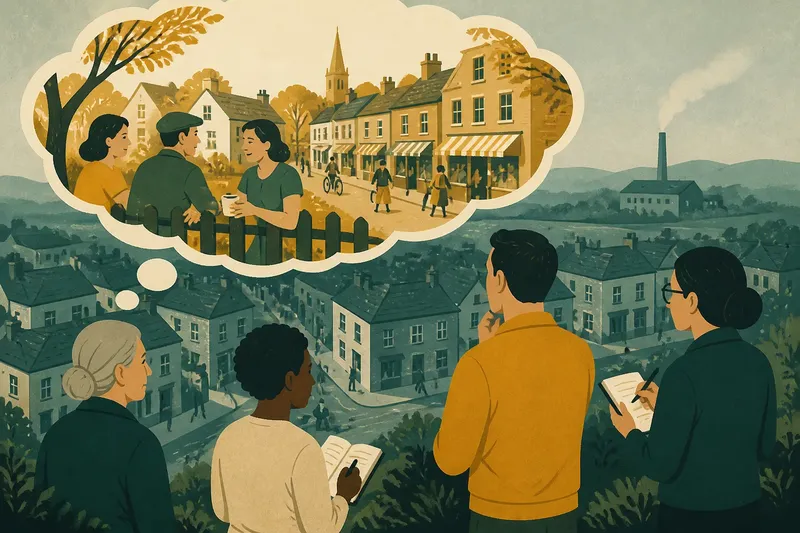
Who had a good life in the “good old days”, and whose account are you hearing? The golden age trap begins when a memory of the past becomes a claim about life for everyone. Nostalgia can preserve real attachments to places, habits and relationships; it becomes poor history when it turns one person’s experience into a lost age of shared harmony.
A golden age is a claim, not a period
People use “golden age” to describe a time when something seemed better: a neighbourhood felt safer, work seemed steadier, public life more civil, or family ties closer. The phrase sounds as if it names a settled historical period. Usually, it names a judgement about the past, made from a particular vantage point.
That distinction matters. A period can contain observable conditions: laws, institutions, working arrangements and everyday practices. Calling it golden adds an evaluation. It selects certain conditions as valuable and often sets aside others. The history question is not simply whether life was better, but which lives, in which respects, and compared with what.
Nostalgia also compresses experience. Many years of mixed memories become a few vivid scenes: neighbours talking over a fence, a familiar high street, a household gathered around a table. Those scenes may be sincere, but they cannot establish that a whole society shared the same security or affection.
A remembered moment can be true without being a complete account of its time.
Memory preserves details and edits their surroundings
Memory is not a recording played back without change. It keeps some details sharply—the smell of a room, a parent’s phrase, the route home—and loses or rearranges others. Later experiences can also shape what an earlier scene seems to mean. A remembered childhood may feel peaceful partly because adults handled its practical burdens out of sight.
This does not make memory useless. A personal recollection can tell us what someone noticed, valued or missed. It can reveal how a place felt from one position. The mistake is asking it to answer questions beyond its reach, such as whether most residents felt equally safe or whether a customary role was freely chosen.
Family stories, memoirs and public reminiscence each have a viewpoint. Someone describing a village as close-knit might remember regular visits and mutual help. A person expected to provide that help may recall the same arrangement as demanding. Neither account automatically cancels the other; together, they show how a shared practice can carry unequal costs.
When a story sounds unusually complete, identify what kind of evidence it offers: personal memory, family legend, public slogan, written record, or some combination.
Check who is included in the golden age story
Nostalgic claims often use broad words—“people”, “families”, “workers”, “the community”—without saying who they mean. Those words can hide differences in wealth, gender, age, religion, region, disability and legal status. A custom or institution may have offered comfort to some while limiting the choices available to others.
Say you hear an invented claim that an old market town was once a place where everybody knew and helped one another. The starting point is a fond story from a shopkeeper’s family, not evidence about every resident. You look for accounts from tenants, domestic workers, newcomers and people who left, as well as records of how housing and work were organised. You then describe close ties among some residents while noting that access to security and influence varied. The result is a more specific account, not a verdict that the fond memory was false.
Ask who could make decisions, who performed unpaid or poorly recognised work, and who could leave an arrangement without losing shelter, income or standing. These questions do not assume that the past was uniformly cruel. They make visible the terms on which its comforts were available.
Replace “everyone had” with the narrower group your evidence can support.
Look for conflict behind a polished story
Accounts of a golden age often praise order, unity or tradition. Each word can conceal disagreements about who set the rules and whose interests they served. A stable workplace, for example, may have offered dependable routines while giving workers little say over conditions. A close household may have provided care while concentrating responsibility on particular members.
Conflict need not mean open violence or constant argument. It can appear in petitions, jokes, refusals, court records, disputes over wages, or quiet departures from a prescribed role. Look for points where rules were challenged or negotiated. If a story says a custom was accepted without question, ask how that conclusion was reached and whose silence is being mistaken for consent.
Do not turn every past practice into a simple story of oppression, either. People can find meaning, skill and solidarity inside arrangements that also constrain them. A careful account holds those possibilities together instead of replacing one romantic picture with a uniformly bleak one.
Compare like with like before calling a past better
“Life was better then” is too broad to check until “better” is made specific. Do you mean access to work, time with family, a sense of belonging, personal freedom, health, housing or confidence about the future? These qualities may point in different directions, and the answer may differ between groups and places.
Comparison also depends on the time span. One remembered decade can be set against a longer stretch that included hardship before and after it. A childhood household can be compared with an adult’s present responsibilities. Without naming the comparison, the past may appear more consistent simply because its difficult transitions have dropped from view.
Choose a clear subject and ask what evidence could bear on it. For a claim about work, relevant material might include job rules, household accounts, union records, oral histories and descriptions of daily duties. For a claim about community, consider who belonged, who provided care, and how neighbours dealt with disagreement. Different evidence answers different questions; no single source needs to carry the whole interpretation.
Compare the same kind of experience across the periods under discussion, and say when the evidence does not support a firm comparison.
Four questions can clarify a nostalgic claim?
Who is speaking, and what could they see?
Place the speaker in the story: consider their age, work, family position, location and connection to the events. That context helps define what the account can illuminate without treating identity as proof that it is right or wrong.
Who is missing from the account?
Look for groups whose work, choices or experiences do not appear in the telling. Then seek material that might bring those perspectives into view, such as letters, local records, oral histories or accounts from people in different roles.
Which specific change is being praised?
Turn a broad claim about a better past into a concrete one: more neighbourly contact, steadier employment, or greater freedom in a particular setting. A narrower claim is easier to compare with evidence and less likely to blur distinct experiences.
What evidence might complicate the story?
Ask what record, testimony or opposing account would make the claim harder to sustain. If nothing could alter the story, it is functioning as a statement of identity or longing rather than an open historical argument.
Use nostalgia as evidence of longing, not a verdict
A fond story can tell us what people feel has been lost: familiar institutions, time for neighbours, a sense of place, or trust between generations. That longing deserves attention even when the account of the past is selective. It can point towards a present concern worth examining without proving that an earlier society had the answer.
When you encounter a claim about a golden age, preserve its emotional meaning while checking its historical scope. Ask what the speaker misses, who shared that experience, and what conditions made it possible. Then describe the past precisely enough to include both its valued connections and its uneven burdens.
The golden age trap is easier to avoid when “better” becomes a question with a subject, a comparison and room for more than one memory. Treat nostalgia as a clue to what matters, and ask whose lives would need to be included before that memory could stand for a shared past.